
Precision Injection Moulding Engineered for Scale
From rapid aluminum prototype tooling to Class 101 hardened steel production moulds, BSG provides end-to-end manufacturing. We combine advanced machinery with strict European quality standards to deliver flawless parts.
Get an Instant Quote
Precision Injection Moulding Engineered for Scale
From rapid aluminum prototype tooling to Class 101 hardened steel production moulds, BSG provides end-to-end manufacturing.
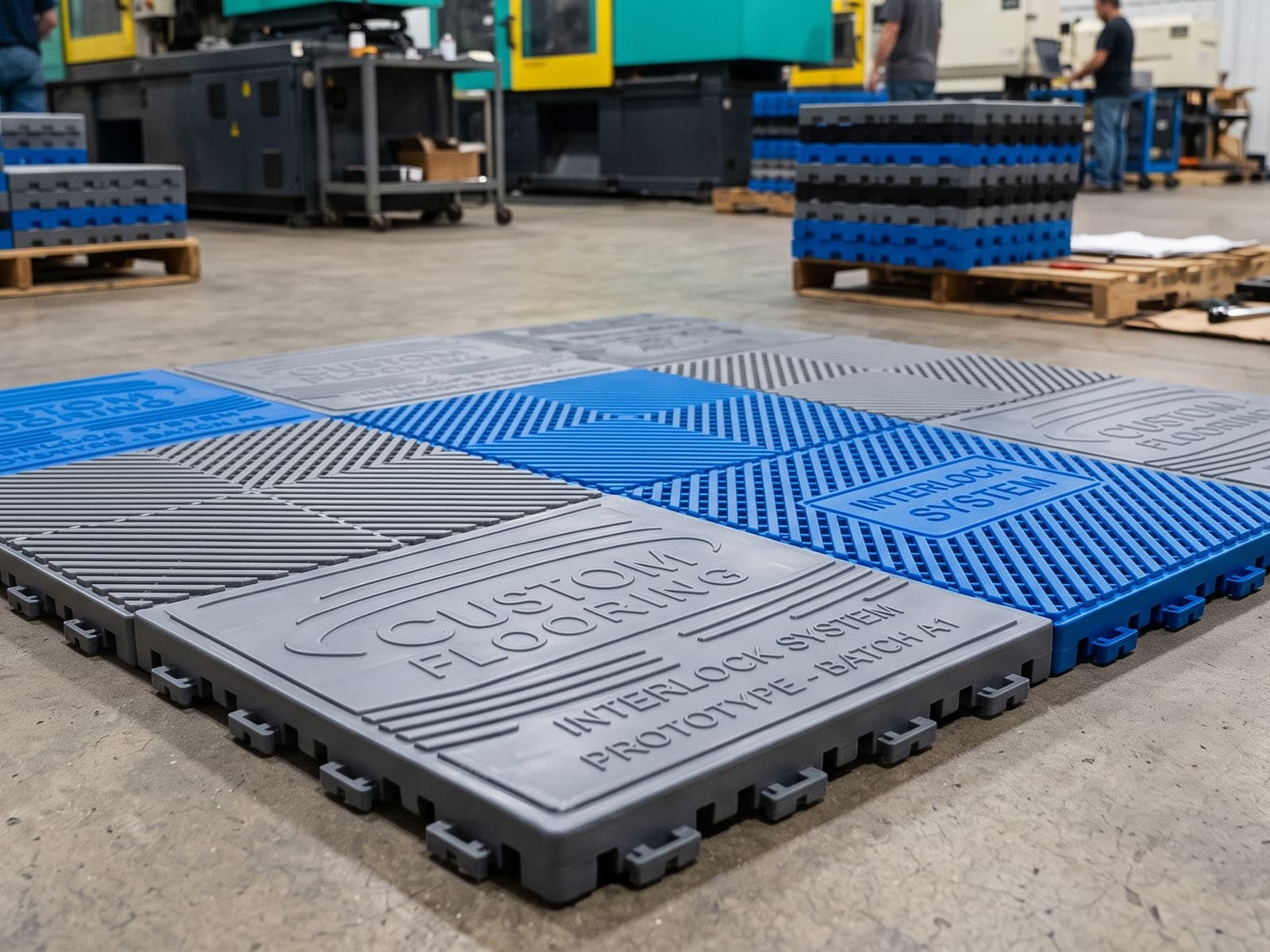
Custom Injection Moulding
High-quality aluminum and steel injection moulds customized to your exact production volumes. Ranging from Class 105 (prototype validation) to Class 101 (extremely high production). We offer free mold flow analysis to ensure optimal part design before cutting steel.
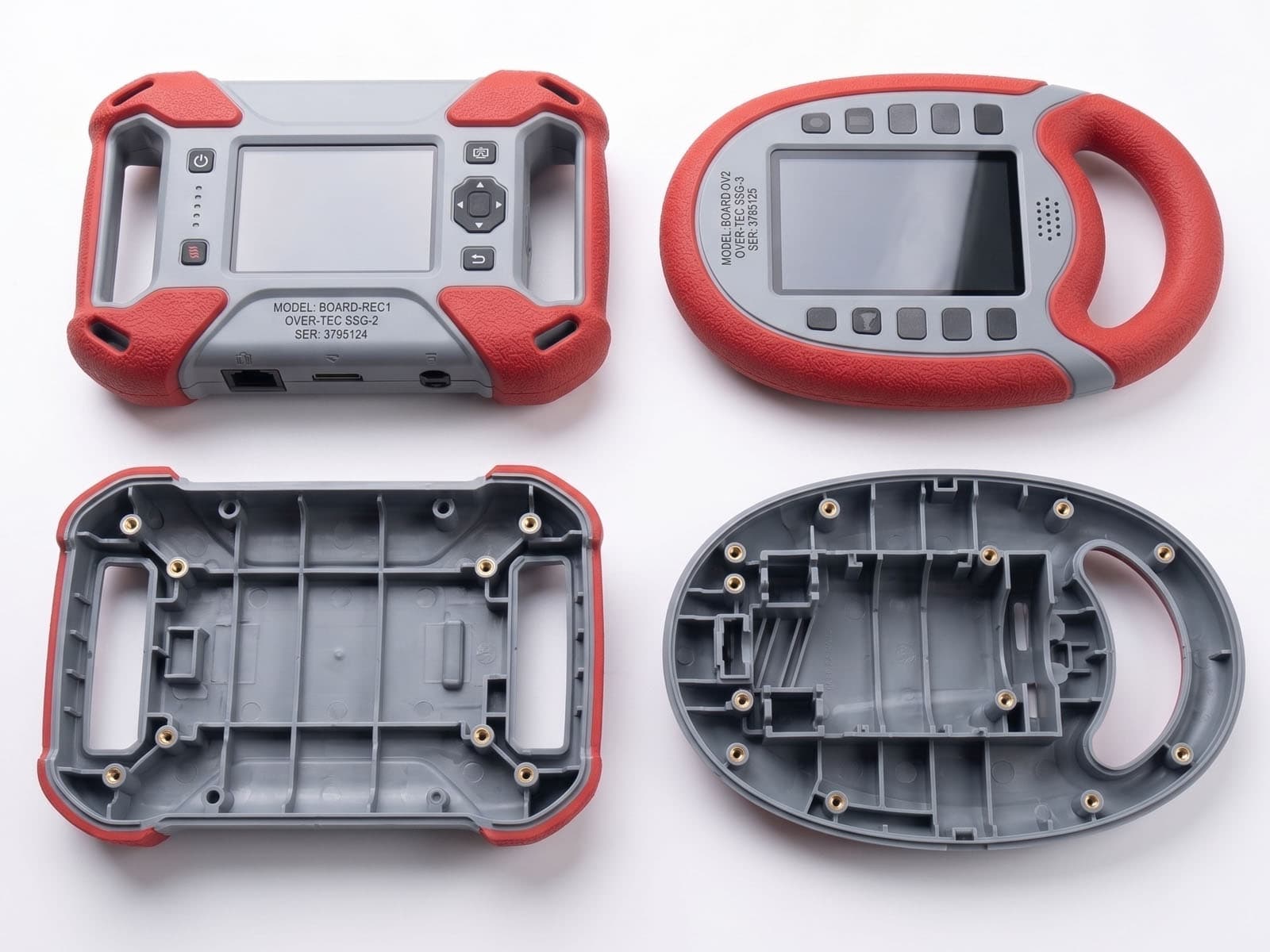
Overmoulding
A multi-step injection process that seamlessly bonds a soft plastic or elastomer to a rigid substrate, creating an integrated, durable product. Ideal for adding ergonomic grips, dampening vibration, or achieving two-tone aesthetic finishes.
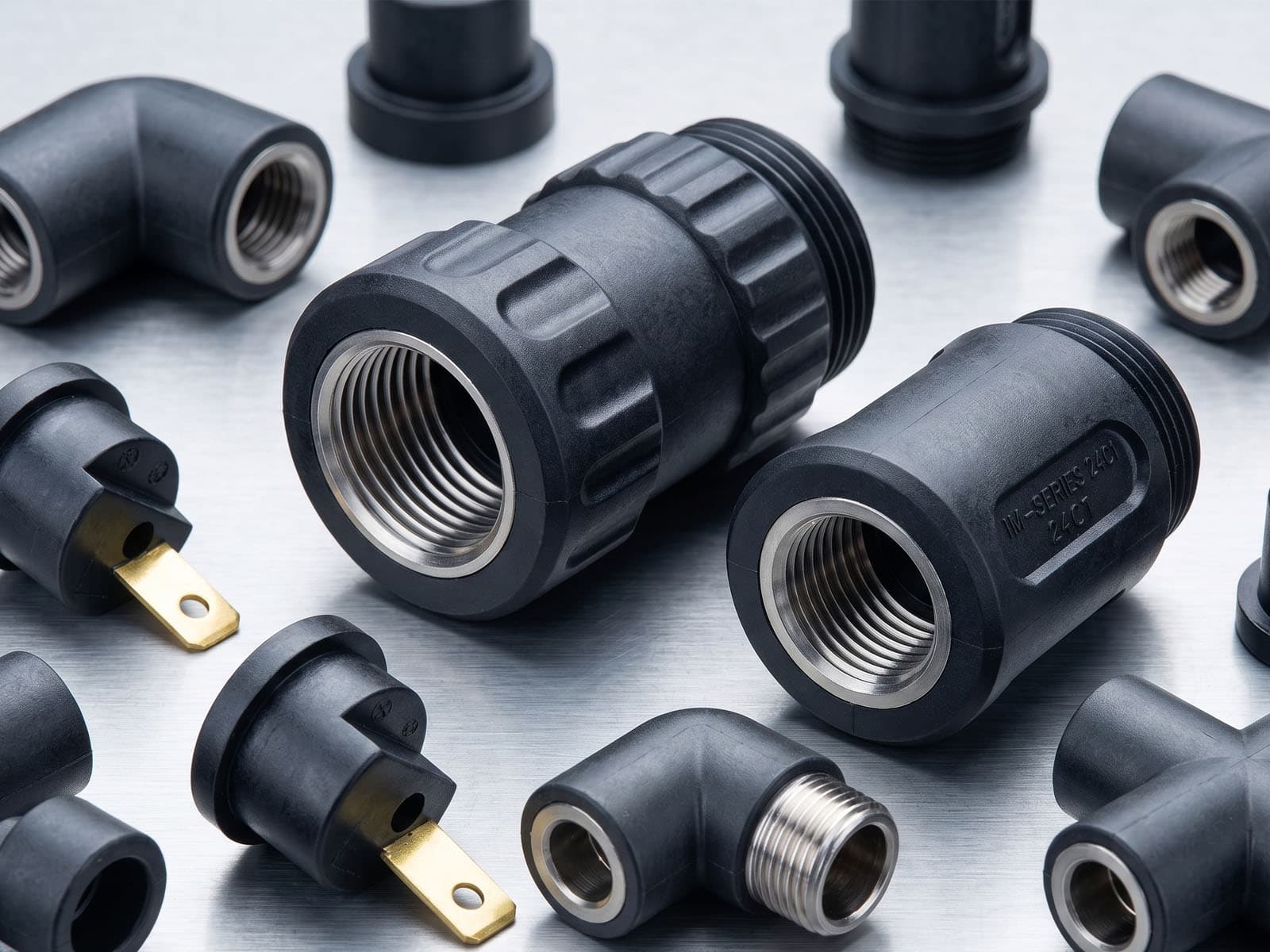
Insert Moulding
Combines high-performance engineering plastics with pre-placed metal components (threaded inserts, pins, or electrical contacts) directly in the mould cavity. This eliminates secondary assembly and fasteners while increasing part strength.
Technical Specifications
Key parameters for injection moulding projects across the BSG network.
| Parameter | Specification |
|---|---|
| Lead Times | As fast as 5 business days for rapid tooling; 3-4 weeks typical for standard production moulds. |
| Production Volume | Low-volume prototyping (100-10,000 parts) to continuous high-volume mass production (100,000+ parts). |
| Machine Range | 25T to 3,700+ ton presses, capable of handling micro-precision parts and large industrial components. |
| Tooling Options | Single-cavity, multi-cavity, and family moulds. Automated side actions or hand-loaded cores available. |
| Mold Classes | Class 105 (prototype / soft tooling) up to Class 101 (hardened steel, extremely high production). |
| Tolerances | Standard industrial tolerances of ±0.1 mm. Tight tolerances down to 0.02 mm (0.0008 in) achievable upon request. |
| Part-to-Part Repeatability | ±0.1 mm (0.004 in) or less. |
| Tool Ownership | 100% customer-owned tooling with complimentary lifetime mould maintenance for active production runs. |
| Inspection & Certifications | ISO 9001 standard. Access to IATF 16949 (Automotive) and ISO 13485 (Medical). FAI and PPAP available. |
| Materials | Comprehensive range of commodity and engineering plastics, elastomers, plus custom sourcing and colour matching. |
Injection Moulding Materials for Every Application
From versatile commodity plastics to extreme-temperature aerospace polymers, our European manufacturing network processes over 100+ thermoplastic and elastomeric resins. We also offer custom compounding, glass-fiber reinforcements, and specific masterbatch colour matching.
Characteristics
High-strength, general-purpose engineering plastic. Offers excellent impact resistance and a perfect balance between mechanical properties, cost, and dimensional accuracy.
Common Applications
Consumer electronics housings, automotive interior trim, industrial covers, and daily-use goods.
Commodity Plastics
- PP (Polypropylene)
- PE (Polyethylene)
- HDPE (High-Density Polyethylene)
- LDPE (Low-Density Polyethylene)
- PS (Polystyrene)
- PET (Polyethylene Terephthalate)
- PVC (Polyvinyl Chloride - Rigid)
Engineering Plastics
- ABS (Acrylonitrile Butadiene Styrene)
- PC (Polycarbonate)
- PC-ABS (Polycarbonate-ABS Blend)
- Nylon (PA6, PA6/6)
- POM (Acetal / Delrin)
- PBT (Polybutylene Terephthalate)
- PMMA (Acrylic)
High-Performance Polymers
- PEEK (Polyether Ether Ketone)
- PEI (Polyetherimide / Ultem)
- PSU (Polysulfone)
- PPS (Polyphenylene Sulfide)
- LCP (Liquid Crystal Polymer)
- PTFE (Teflon blends)
Elastomers & Silicones
- TPE (Thermoplastic Elastomer)
- TPU (Thermoplastic Polyurethane)
- LSR (Liquid Silicone Rubber)
- EPDM (Ethylene Propylene Diene Monomer)
- TPV (Santoprene)
Looking for something specific? We routinely source specialty resins, exact brand-name equivalents, and process additives including Glass Fiber (GF), Carbon Fiber (CF), UV stabilizers, and custom RAL/Pantone colour matching. Speak to an Engineer
From Raw Part to Retail-Ready Product
We provide comprehensive end-to-end manufacturing. Whether you need an ultra-high gloss SPI-A2 finish for consumer optics, a specific VDI texture for automotive interiors, or complex ultrasonic welding, our network delivers fully finished components.
| Finish Category | Industry Standard | Description & Application |
|---|---|---|
| As-Moulded (Non-Cosmetic) | PM-F0 / PM-F1 | Standard finish with visible tool marks. Ideal for hidden internal components, brackets, or rapid prototypes where cosmetics do not matter. |
| Matte / Low-Gloss | SPI-C1 to SPI-C3 | 600 to 320 grit stone finish (10-25 Ra). Removes most tool marks, leaving a smooth, flat appearance. Good for industrial housings. |
| High-Gloss / Polished | SPI-A1 to SPI-A3 | Grade #3 to #15 diamond buff (1-3 Ra). Creates a mirror-like, optically clear finish. Essential for lenses, light pipes, and premium consumer goods. |
| Textured / Sandblasted | PM-T1 / PM-T2 | Bead blast finishes providing a uniform, slightly rough texture. Excellent for hiding sink marks, flow lines, and handling scratches. |
| Custom Texturing | VDI / Mold-Tech | Chemically etched textures ranging from fine leather to heavy stipple. Heavily used in automotive and consumer electronics for grip and aesthetics. |
DFM Note: Textured finishes require additional draft angles to eject properly. As a general rule, add 1.5° of draft for every 0.025 mm (0.001″) of texture depth. Our engineering team will verify this during your free DFM review.
Uncompromising Quality Control for EU Standards
We guarantee that every plastic moulded part meets strict European dimensional and cosmetic tolerances through rigorous cross-team reviews and advanced metrology.
Tooling & Pre-Production Validation
Quality begins before steel is cut. Our engineers conduct comprehensive Design for Manufacturability (DFM) reviews and mold-flow analysis to optimize part geometry, cooling systems, and gate locations. Trial moulds (T1) are rigorously tested to validate functionality and stabilize parameters.
In-Process Quality Control
Continuous monitoring guarantees batch-to-batch consistency. We employ scientific moulding principles, strictly controlling injection speed, pressure, and barrel temperatures. Regular interval checks during the production run immediately detect and correct any deviations.
Final Metrology & Verification
Completed parts undergo thorough physical and visual inspections against your specific GD&T requirements. Using advanced precision instruments like CMMs and colorimeters, we verify dimensional accuracy, structural integrity, and cosmetic finishes.
Tooling & Pre-Production Validation
Quality begins before steel is cut. Our engineers conduct comprehensive Design for Manufacturability (DFM) reviews and mold-flow analysis to optimize part geometry, cooling systems, and gate locations. Trial moulds (T1) are rigorously tested to validate functionality and stabilize parameters.
In-Process Quality Control
Continuous monitoring guarantees batch-to-batch consistency. We employ scientific moulding principles, strictly controlling injection speed, pressure, and barrel temperatures. Regular interval checks during the production run immediately detect and correct any deviations.
Final Metrology & Verification
Completed parts undergo thorough physical and visual inspections against your specific GD&T requirements. Using advanced precision instruments like CMMs and colorimeters, we verify dimensional accuracy, structural integrity, and cosmetic finishes.
How Plastic Injection Moulding Works
The plastic injection moulding process begins with the feeding and melting phase. Raw plastic materials, usually in the form of small pellets or granules, are poured into a large hopper. From there, they enter a heated barrel containing a reciprocating screw. As the screw rotates, it moves the pellets forward while the combination of friction and external heater bands melts the plastic into a viscous liquid.
Once the plastic is fully melted, the reciprocating screw moves forward rapidly, acting like a syringe to force the molten plastic through a nozzle and into the cavity of a custom-designed metal mould tool. The mould is held shut under immense force by a clamping cylinder. Once the cavity is filled, the plastic begins to cool and solidify, taking the exact shape of the mould.
After the part has sufficiently cooled, the moving platen of the machine retracts, opening the mould halves. Ejector pins or plates push the finished plastic part out of the mould. Once the part is cleared, the mould closes again and the screw begins to prepare the next shot. This entire cycle can take anywhere from a few seconds to several minutes, repeating continuously for high-volume mass production.
Prototype & Bridge Tooling
Before committing to hardened steel production tooling, BSG produces functional injection-moulded prototypes from your actual production material, not a 3D-printed substitute. Aluminum prototype tools are quoted within 48 hours and machined far faster than steel, delivering first samples in as little as 2 to 6 weeks depending on part complexity.
Because prototypes are moulded in original resins such as PP, PE, ABS, PA, POM, PC, TPE, or PEEK, you can validate dimensional stability, material behaviour, tolerance compliance, and assembly fit under realistic conditions, not just visual appearance. This makes prototype tooling the standard bridge between design validation and full-scale production.
| Parameter | Specification |
|---|---|
| Tool Material | Aluminum (vs. hardened steel for production tools) |
| Quote Turnaround | Within 48 hours |
| First Samples | 2 to 6 weeks, depending on part complexity |
| Typical Tooling Investment | From approx. €5,000, depending on geometry and cavities |
| Production Capacity | Up to several tens of thousands of parts per tool |
| Materials | Original production resins: PP, PE, ABS, PA, POM, PC, TPE, PEEK |
Custom Plastic Profile Extrusion
Alongside injection moulding, BSG's network produces custom extruded plastic profiles for machinery, construction, and industrial applications. Standard thermoplastics are processed by screw extrusion, while ultra-high molecular weight materials use ram extrusion, both pressure- and temperature-controlled to produce a consistent, low-stress profile structure.
Extrusion lines handle coextrusion and hybrid profiles combining rigid and flexible plastics, with optional glass-fibre or metal reinforcement. Inline drilling and stamping, plus post-processing such as milling, turning, and printing, mean profiles can arrive ready for assembly rather than as raw stock requiring further machining.
PP
- Lightweight, chemically resistant, cost-effective for general profiles.
PE-HD
- Weather-resistant and tough, common for outdoor protective profiles.
ASA
- Excellent UV and weather resistance for exterior applications.
ABS
- High impact strength with good surface quality for indoor technical profiles.
PA (Nylon)
- High strength and abrasion resistance for mechanical profiles.
PVC-U / PVC-P
- Form-stable and flame-resistant, available rigid or flexible.
Typical Applications
- Building and construction profiles
- Custom industrial profile tubes
- Technical hoses
- Sanitary and supply system components
- Machine and equipment components
Extrusion partners in our network hold ISO 9001:2015, ISO 14001:2015, and ISO 45001:2018 certification, with REACH and RoHS compliance and in-house testing for mechanical, chemical, and ageing resistance.
In-House Mold & Tool Making
Production tooling is built using 3D CNC milling, CNC turning, CNC grinding, and EDM (sinker erosion) to machine mold components to precision tolerances. Tool design is developed in 3D CAD with mould-flow simulation, so cooling layout, gate placement, and ejection are engineered before steel is cut, not corrected afterward.
A finished mold consists of an injection-side (static) half and an ejector-side half, built from cavities and cavity inserts, cold- or hot-runner gate systems, ejection elements, and sliding cores for undercuts, each with independent temperature control. Tool quality directly determines dimensional accuracy, surface finish, and cycle time in production, so mold design, tool making, and moulding teams work from the same data throughout the build.
| Parameter | Specification |
|---|---|
| Manufacturing Processes | 3D CNC milling, CNC turning, CNC grinding, EDM (sinker erosion) |
| Mold Size | Up to 1,100 x 700 mm (larger on request) |
| Mold Complexity | Up to several hundred individual components per mold |
| Production Capacity | Multiple millions of parts per production mold |
| Gate Systems | Cold-runner and hot-runner |
| Design Software | 3D CAD with mould-flow simulation |
Frequently Asked Questions
Everything you need to know about partnering with BSG for your injection moulding and nearshoring needs.
Why Companies Choose BSG
We combine Balkan production economics with European engineering standards and a single-contract model.
Confidence
You always know who manufactures your parts and how.
- Verified supplier network
- Full production transparency
- Direct factory communication
Control
BSG personally oversees the entire project from start to finish, working directly with engineers at our partner facilities.
- Dedicated point of contact
- Real-time progress updates
- On-demand inspections
Capacity
Access unused production capacity across a verified network of Balkan factories.
- 50+ manufacturing partners
- Scalable production volumes
- Multi-technology access
Cost Down
Lower European cost pressure without the logistical risks of moving production to Asia.
- 30-50% cost reduction
- 2-4 day EU delivery
- No ocean freight delays
Ready to Start Your Injection Moulding Project?
Upload your CAD files and BSG will review feasibility, select the optimal manufacturing partner, and prepare a quotation.