
Sanitary Stainless Steel Process Piping
BSG delivers hygienic process piping for food, beverage, and pharmaceutical production lines. Every weld is produced by orbital TIG welding, pickled and passivated, and built to EHEDG and 3-A Sanitary Standards for CIP/SIP-ready systems.
Get an Instant Quote
Food-Grade Piping Capabilities
BSG delivers hygienic process piping built for food, beverage, and pharmaceutical production, welded, treated, and finished to sanitary design standards.
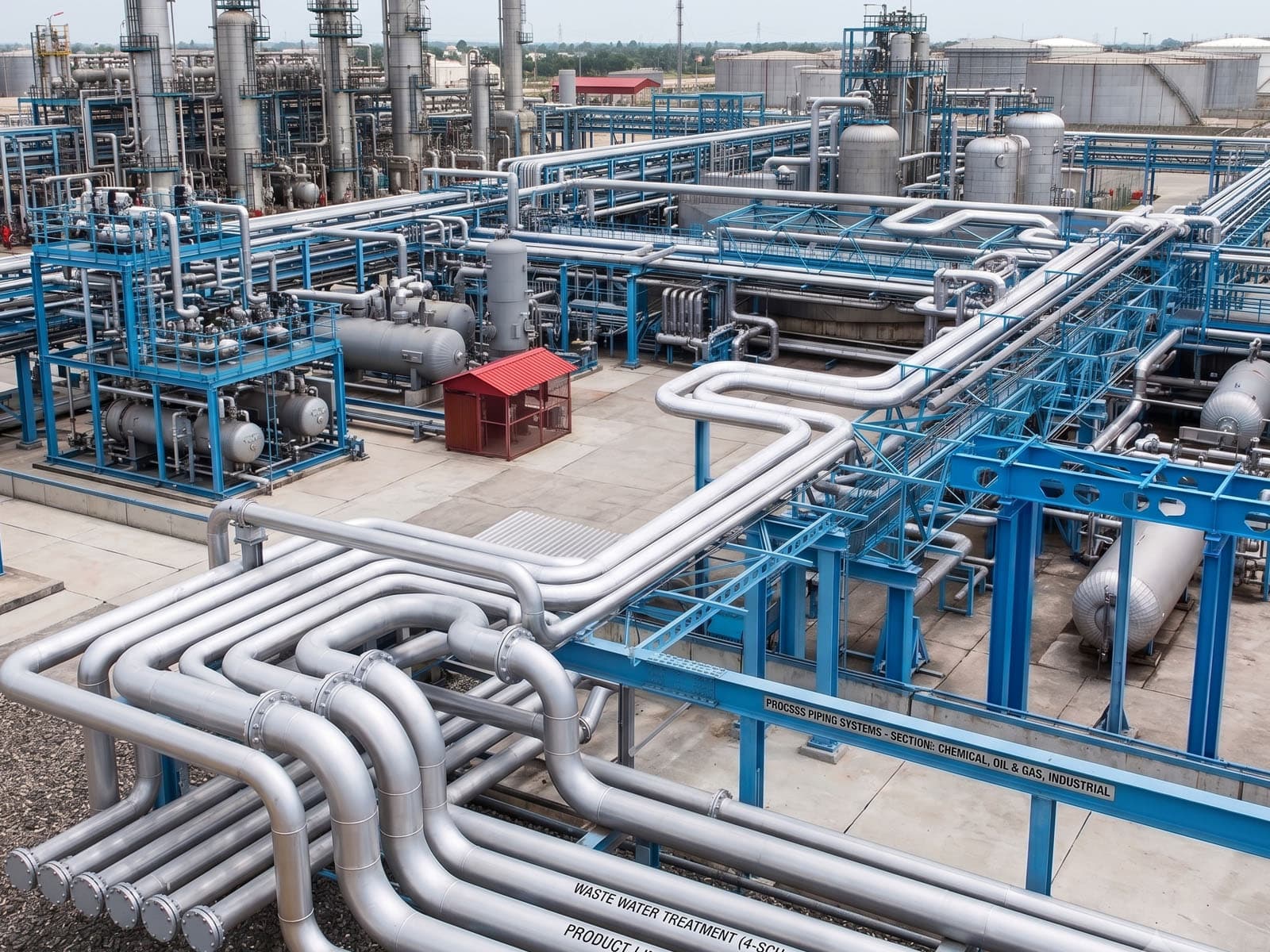
Process Piping Systems
Welded piping systems for chemical, oil & gas, and industrial process plants, engineered and fabricated to ASME B31.3 and EN 13480 requirements.
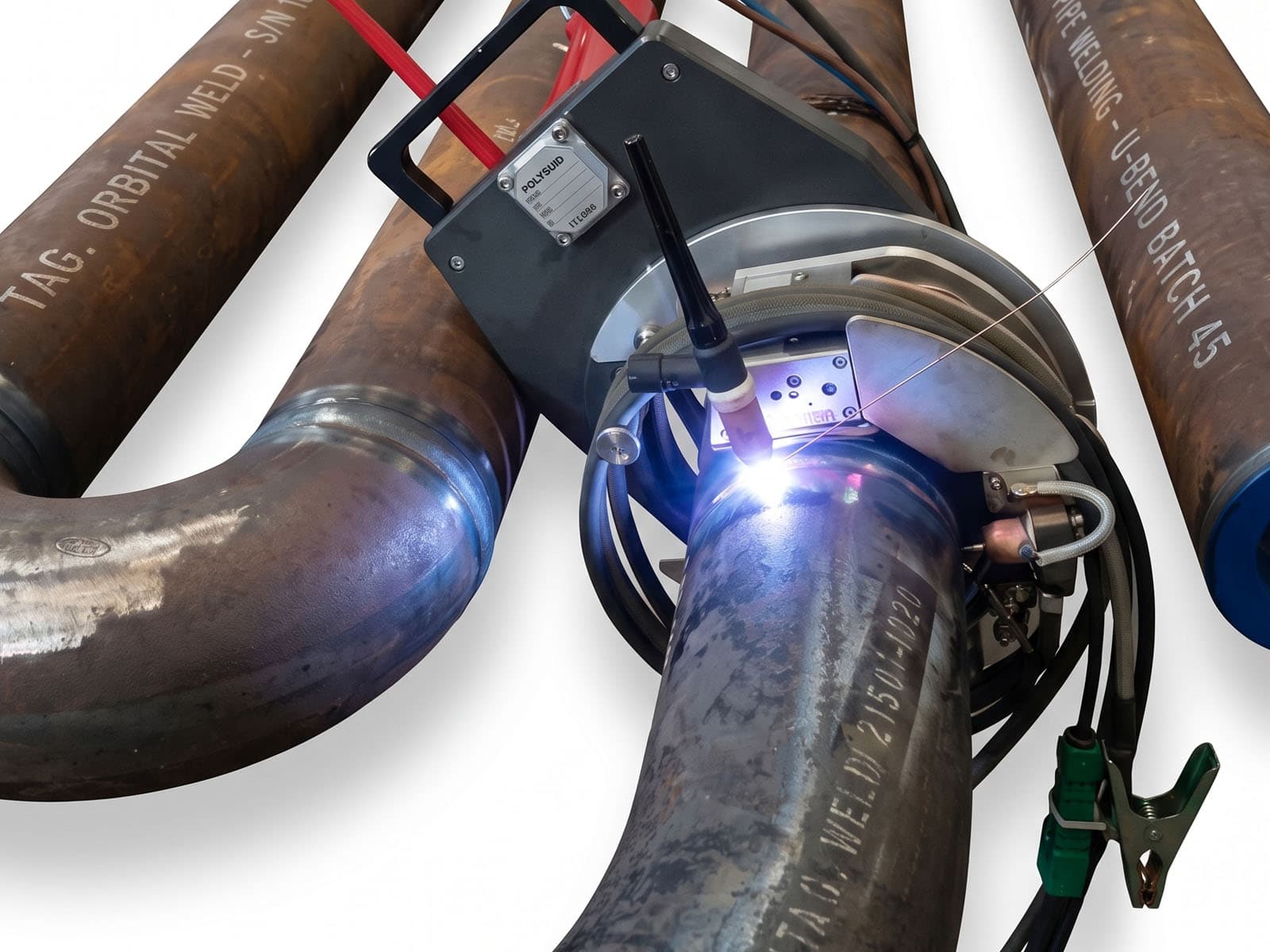
Orbital Pipe Welding
Automated orbital TIG welding delivers consistent, contamination-free welds on small-to-medium diameter pipe, ideal for high-purity and hygienic process lines.
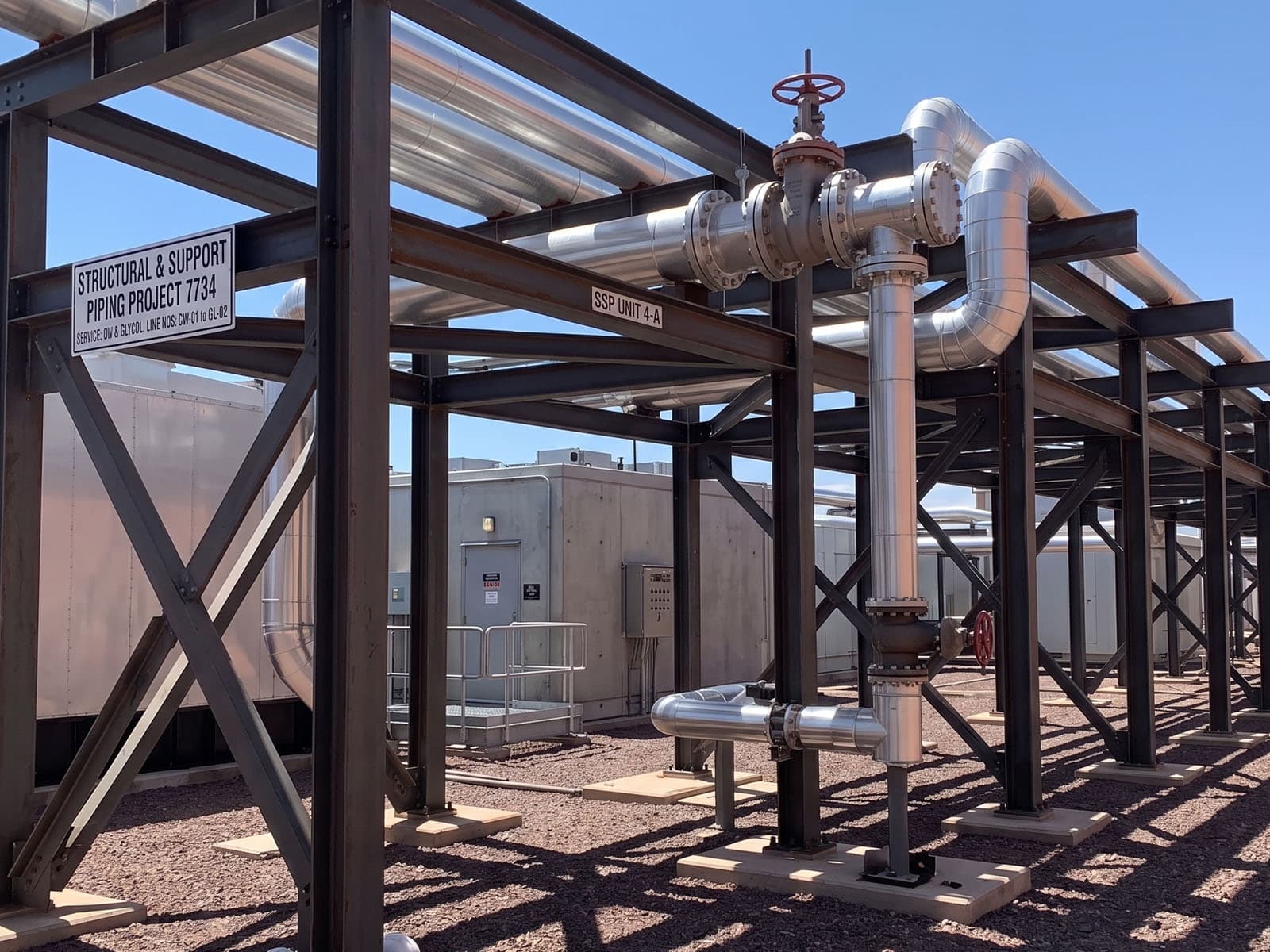
Structural & Support Piping
Welded pipe and tube for structural frames, handrails, and equipment supports, matched to load requirements and finished to specification.
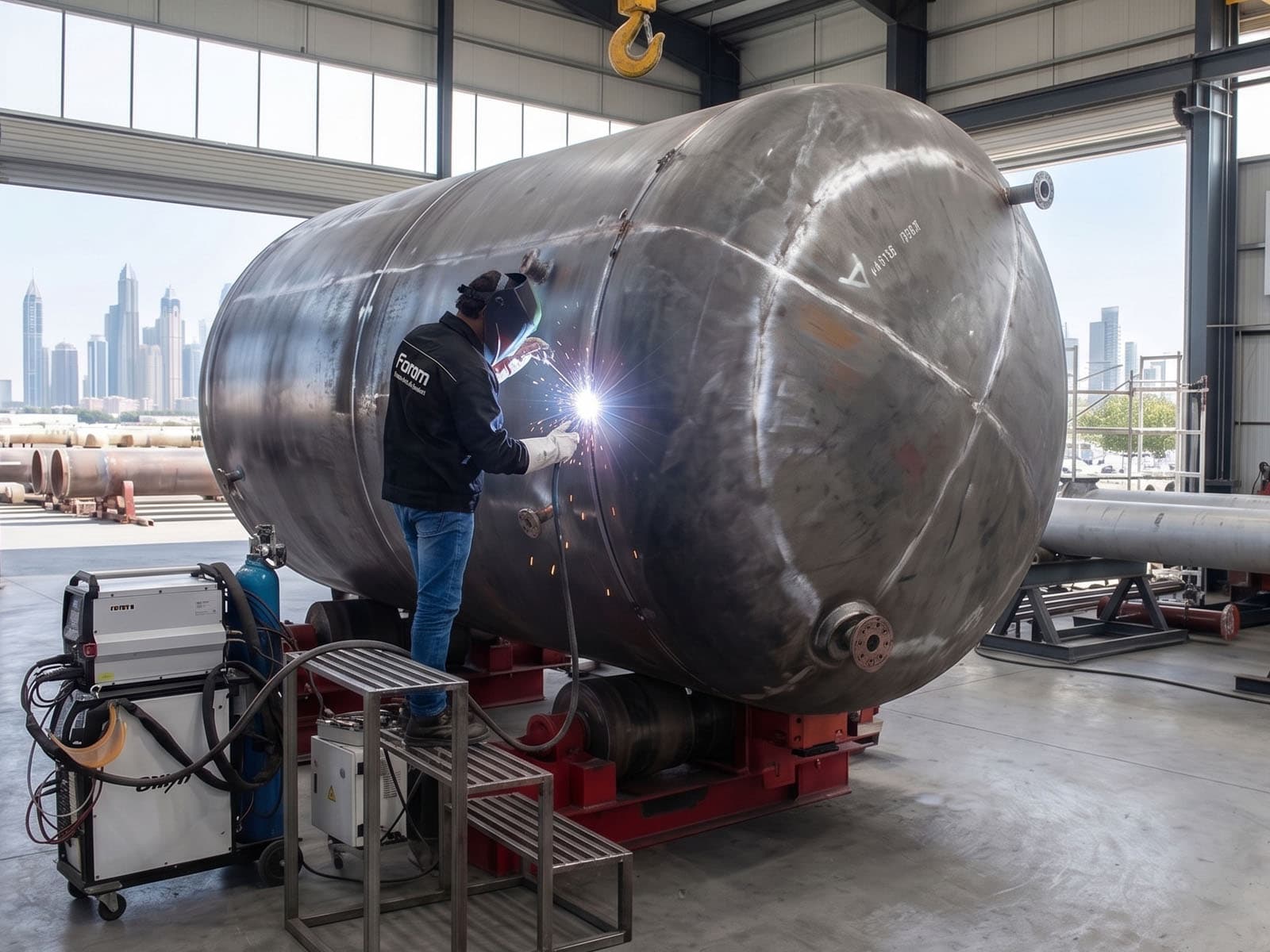
Pressure Vessel & Pipeline Welding
Certified welders and qualified procedures for pressure-retaining piping and vessels, including full NDT documentation per PED 2014/68/EU.
Piping Materials
We work with a full range of hygienic-grade stainless steels, sourced with full mill certificates and EN 10204 3.1 documentation.
Austenitic Stainless Steel
- Standard grade for food and beverage piping
- Low-carbon 304L reduces weld-decay risk
- Excellent hygienic and corrosion performance
- Widely accepted across EU food safety frameworks
Molybdenum-Alloyed Stainless
- Superior resistance to chlorides and acids
- Preferred for dairy, brewing, and CIP-heavy processes
- Low-carbon 316L for optimal weldability
- Common choice for pharmaceutical-grade systems
Duplex & High-Alloy Grades
- For aggressive cleaning chemicals and high-chloride environments
- Higher mechanical strength allows thinner wall sections
- Available on request for specialized hygienic applications
- Welded per qualified WPS specific to each alloy
From Drawing to Delivery
A streamlined process personally managed by BSG at every stage.
Submit Your Request
Upload isometric drawings, P&IDs, or a line list. Our engineers review hygienic design requirements and surface finish targets within 24 hours.
We Match & Engineer
BSG selects a certified factory from our network, and their engineers prepare qualified orbital welding procedures matched to your material and diameter.
Production + Quality Control
We supervise fabrication on-site, verify weld consistency, and manage pickling, passivation, and surface roughness checks against specification.
Delivered To You
One supplier, one invoice, one responsibility. Finished sanitary piping and spools are delivered directly to your EU facility, ready for install.
Get an Instant Quote
Hygienic Welding Technologies Available
Orbital and manual TIG welding, matched to your pipe diameter, geometry, and hygienic design requirements by our partner engineers.
Orbital Welding
Orbital TIG welding uses a mechanized welding head that rotates fully around the pipe, producing highly consistent, repeatable welds without operator variation. It is the standard process for hygienic and high-purity piping, where a smooth, crevice-free internal bore is essential for cleanability.
Technical Specifications
- Process
- Automated GTAW (orbital head)
- Best For
- Hygienic, high-purity, and sanitary process piping
- Consistency
- Excellent (eliminates operator-to-operator variation)
- Typical Range
- DN 15 – DN 150 (larger on request)
- Standard
- DIN EN 10357, EN ISO 15614-1 qualified procedures
Orbital Welding
Orbital TIG welding uses a mechanized welding head that rotates fully around the pipe, producing highly consistent, repeatable welds without operator variation. It is the standard process for hygienic and high-purity piping, where a smooth, crevice-free internal bore is essential for cleanability.
Technical Specifications
- Process
- Automated GTAW (orbital head)
- Best For
- Hygienic, high-purity, and sanitary process piping
- Consistency
- Excellent (eliminates operator-to-operator variation)
- Typical Range
- DN 15 – DN 150 (larger on request)
- Standard
- DIN EN 10357, EN ISO 15614-1 qualified procedures
Design Guidelines for Food-Grade Piping
Follow these best practices to ensure your piping system meets EHEDG, 3-A, and DIN EN 10357 hygienic design requirements.
Surface Finish & Roughness
- Internal Roughness
- Ra < 0.8 µm typical
- Weld Seam Finish
- Match parent metal Ra
- External Finish
- Ra 1.6 µm common
Specify internal surface roughness based on product sensitivity, since dairy and pharmaceutical lines often require the tightest finishes.
Weld seam roughness should match the surrounding pipe surface to avoid localized bacterial harborage points.
External surfaces typically permit a coarser finish than product-contact surfaces.
Post-Weld Treatment
- Pickling
- Full bath or local gel
- Passivation
- Required for all product-contact welds
- Purge Gas Control
- Argon back-purge
Remove heat tint and restore the passive chromium oxide layer after every weld.
Passivation treatment is essential to reinstate corrosion resistance at and around the weld zone.
Back-purge the pipe bore during welding to prevent sugaring and oxidation on the internal surface.
Hygienic Joint Design
- Crevice-Free Joints
- No dead legs or gaps
- Self-Draining Layout
- Slope toward drain points
- Fitting Selection
- Hygienic clamp/tri-clamp fittings
Design joints to eliminate crevices and dead legs where product residue could collect and harbor bacteria.
Route piping with continuous fall toward drain points so no product or cleaning fluid can pool.
Use hygienic-rated fittings and gaskets rather than threaded connections wherever the line must be opened for cleaning or inspection.
Standards & Certification
- Hygienic Design Guidelines
- EHEDG
- Sanitary Standards
- 3-A Sanitary Standards
- Hygienic Piping Standard
- DIN EN 10357
European Hygienic Engineering & Design Group guidelines govern hygienic equipment and piping design.
Widely referenced in dairy and food processing, particularly for equipment destined for North American markets.
Defines dimensions and tolerances for stainless steel tubes used in food, chemical, and pharmaceutical industries.
Cleaning Compatibility
- CIP Compatibility
- Design for full drainage
- SIP Compatibility
- Rated for steam sterilization
- Cleaning Agent Compatibility
- Match grade to chemistry
Clean-in-Place systems depend on smooth bores and self-draining geometry to reach every internal surface.
Where Steam-in-Place is used, specify materials and gaskets rated for repeated thermal cycling.
Confirm stainless grade compatibility with the specific cleaning agents and concentrations used in your CIP cycle.
Material Traceability
- Mill Certificates
- EN 10204 3.1
- Weld Consumable Traceability
- Batch-recorded
- Welder Qualification Records
- EN ISO 9606-1
Require 3.1 certification on pipe and fitting material for food, beverage, and pharmaceutical piping.
Record filler metal and shielding gas batch numbers against each weld for full traceability.
Maintain current welder and procedure qualification records matched to orbital and manual TIG processes.
Frequently Asked Questions
Common questions about our food-grade process piping services.
Why Companies Choose BSG
We combine Balkan production economics with European engineering standards and a single-contract model.
Confidence
You always know who manufactures your parts and how.
- Verified supplier network
- Full production transparency
- Direct factory communication
Control
BSG personally oversees the entire project from start to finish, working directly with engineers at our partner facilities.
- Dedicated point of contact
- Real-time progress updates
- On-demand inspections
Capacity
Access unused production capacity across a verified network of Balkan factories.
- 50+ manufacturing partners
- Scalable production volumes
- Multi-technology access
Cost Down
Lower European cost pressure without the logistical risks of moving production to Asia.
- 30-50% cost reduction
- 2-4 day EU delivery
- No ocean freight delays
Have a Food-Grade Piping Project?
Upload your isometric drawings and BSG will review feasibility, select the right production partner, and prepare a detailed quotation.