
Industrial Pipe Welding Services
BSG delivers certified pipe welding for process, structural, and hygienic piping systems, from single spools to full pipeline fabrication. Our network combines orbital, TIG, MIG/MAG, and submerged arc welding under ASME B31.3 and EN 13480 quality frameworks.
Get an Instant Quote
Pipe Welding Capabilities
BSG provides full-lifecycle pipe welding services, from process and structural piping to hygienic and pressure-retaining systems. Our certified network covers orbital, TIG, MIG/MAG, and submerged arc welding technologies.
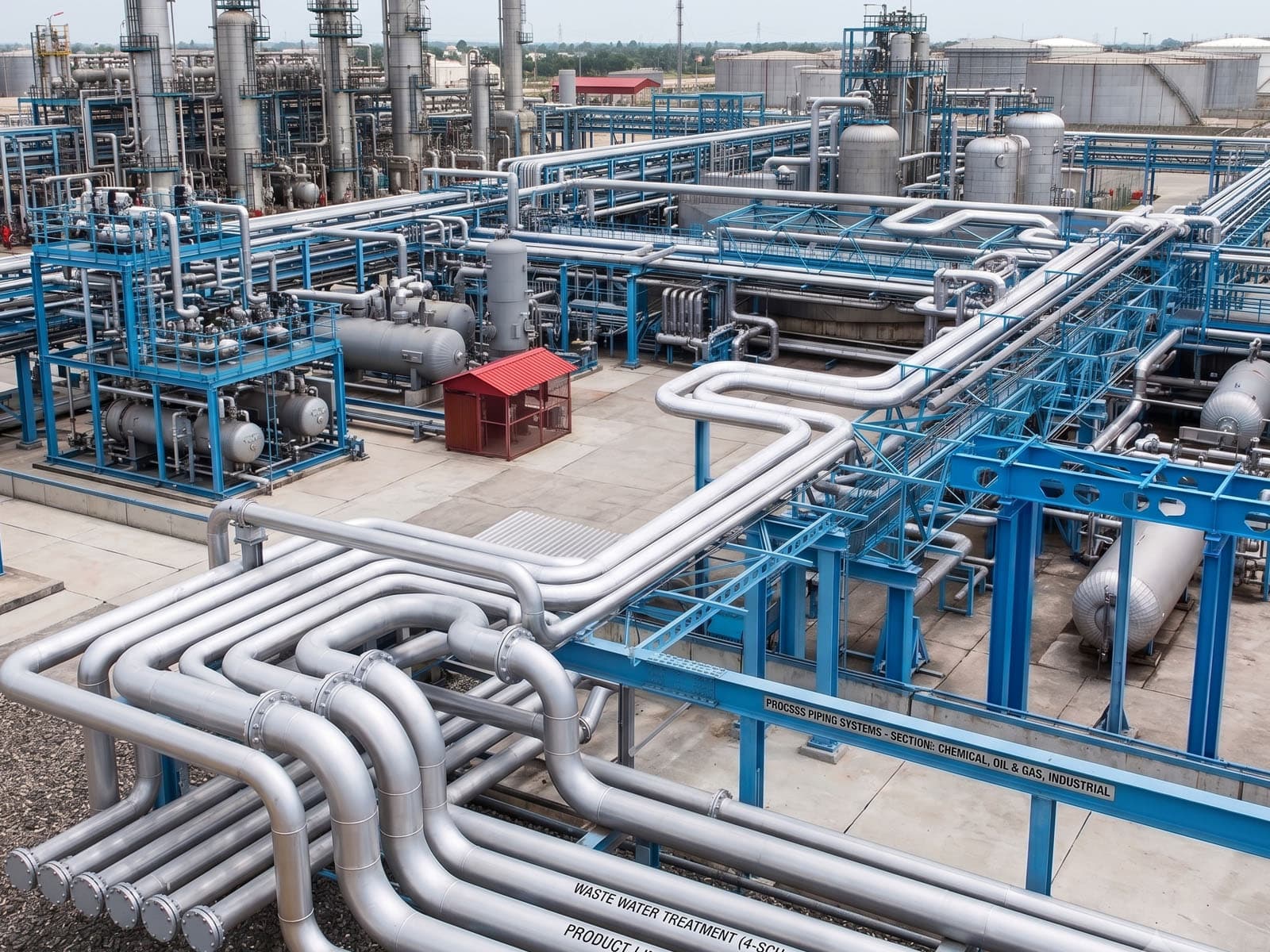
Process Piping Systems
Welded piping systems for chemical, oil & gas, and industrial process plants, engineered and fabricated to ASME B31.3 and EN 13480 requirements.
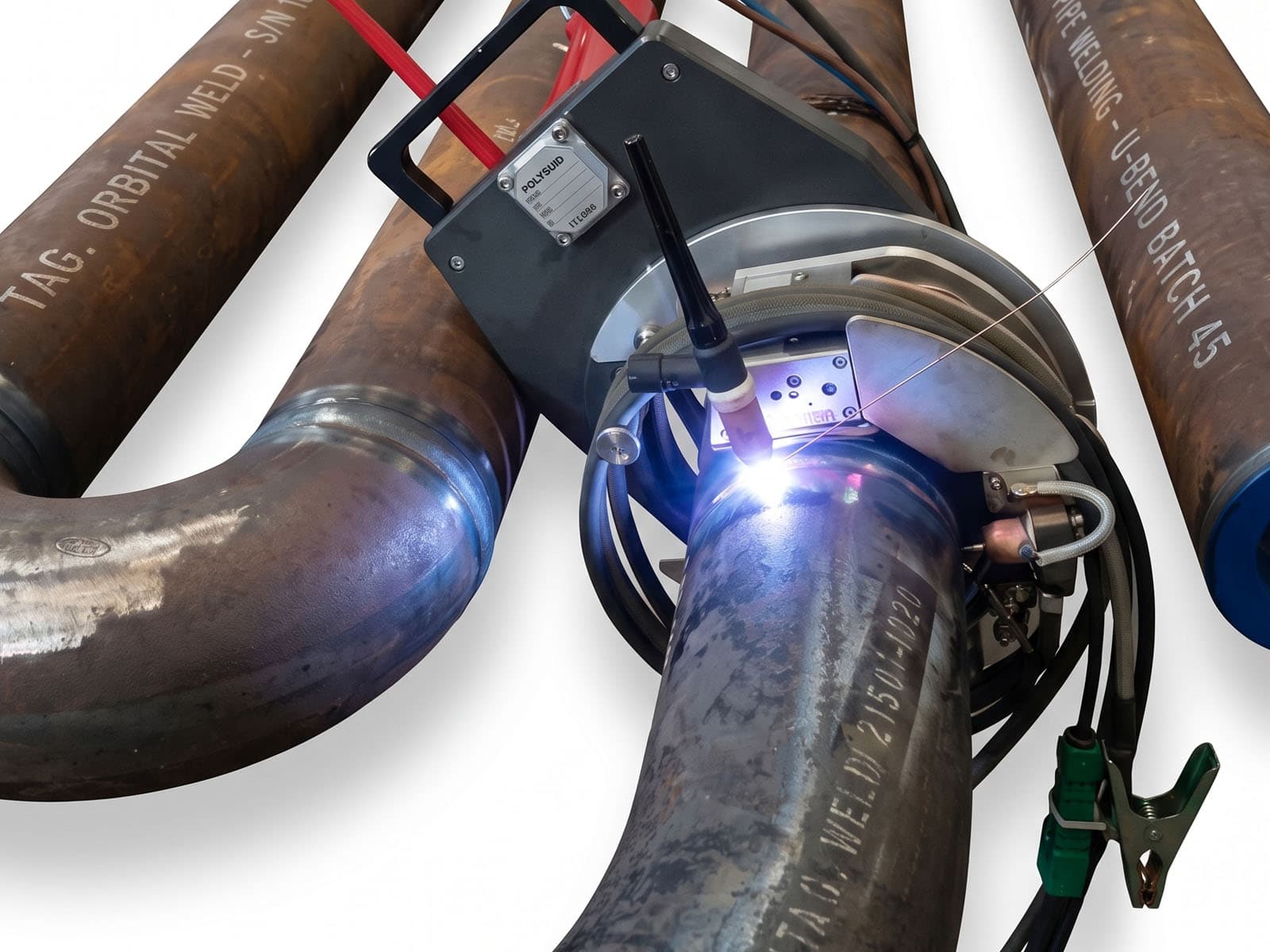
Orbital Pipe Welding
Automated orbital TIG welding delivers consistent, contamination-free welds on small-to-medium diameter pipe, ideal for high-purity and hygienic process lines.
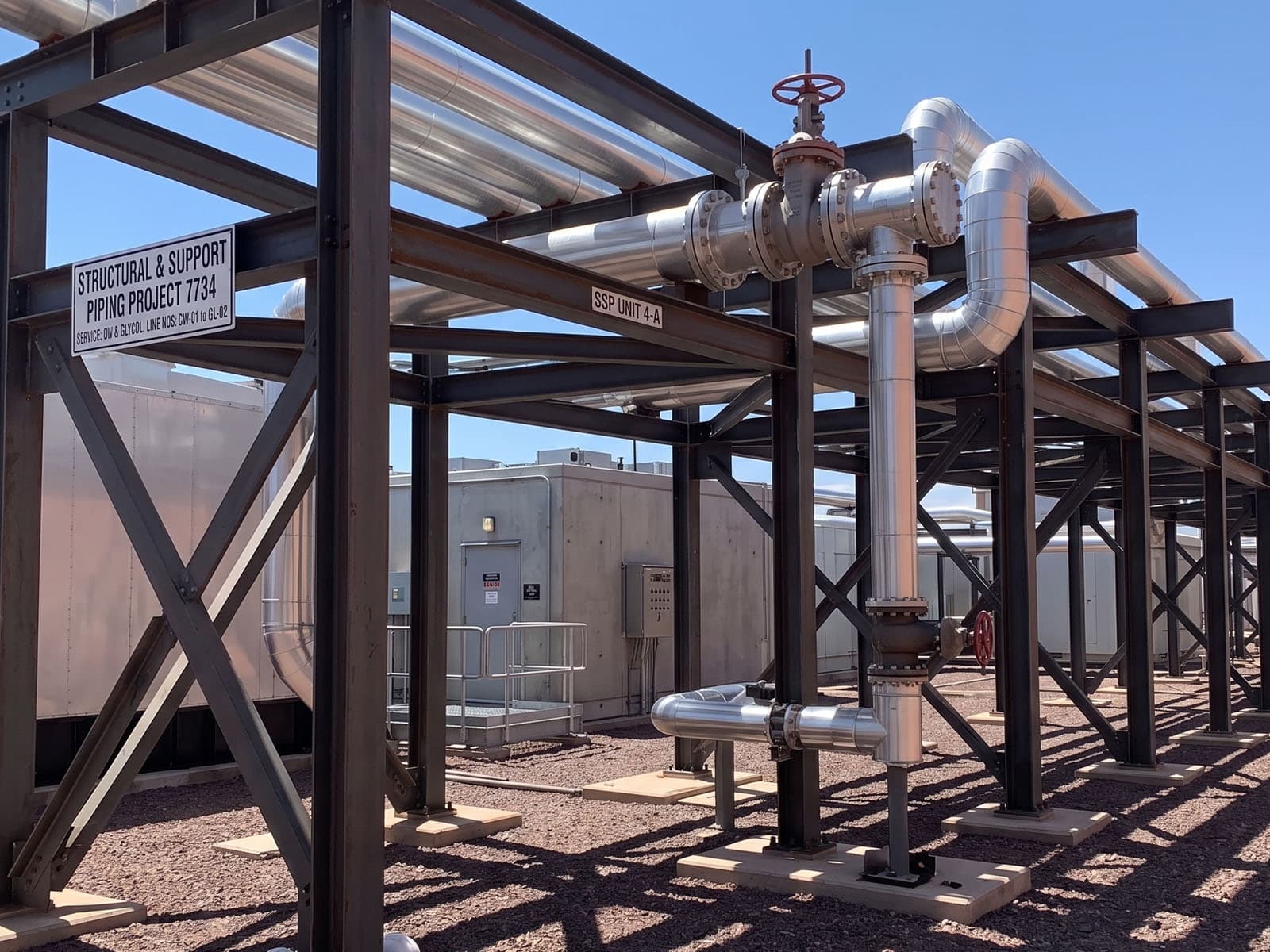
Structural & Support Piping
Welded pipe and tube for structural frames, handrails, and equipment supports, matched to load requirements and finished to specification.
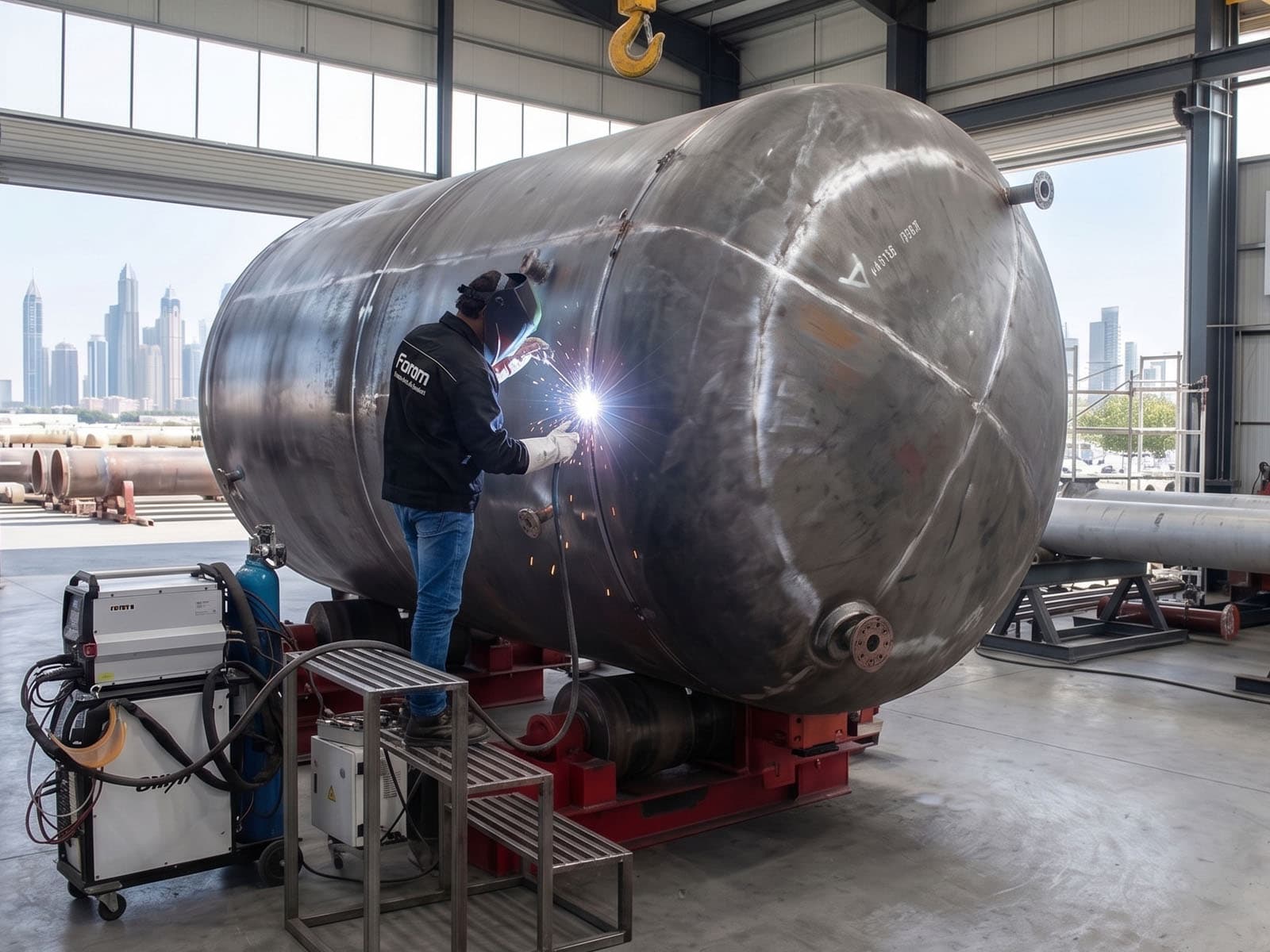
Pressure Vessel & Pipeline Welding
Certified welders and qualified procedures for pressure-retaining piping and vessels, including full NDT documentation per PED 2014/68/EU.
Pipe Materials
We work with a full range of process and structural pipe materials, sourced with full mill certificates and EN 10204 3.1 documentation.
Carbon & Alloy Steel
- Standard for process and utility piping
- Good weldability across all common schedules
- Suitable for elevated temperature and pressure service
- EN 10204 3.1 mill certification available
Stainless Steel
- Corrosion resistance for process, hygienic, and marine applications
- 304L / 316L: most common for food and pharmaceutical piping
- Duplex grades for high-chloride and high-strength service
- Orbital TIG welding for smooth, contamination-free bores
Specialty Alloys
- For aggressive chemical and offshore environments
- High resistance to pitting and stress corrosion cracking
- Available on request for specialized process applications
- Welded per qualified WPS specific to each alloy
From Drawing to Delivery
A streamlined process personally managed by BSG at every stage.
Submit Your Request
Upload isometric drawings, P&IDs, or a line list. Our engineers review material, schedule, and welding requirements within 24 hours.
We Match & Engineer
BSG selects the right factory from our certified network, and their engineers prepare qualified welding procedures (WPS/PQR) for your project.
Production + Quality Control
We supervise fabrication on-site, perform in-process inspections, and manage required NDT (RT, UT, PT) per your specification.
Delivered To You
One supplier, one invoice, one responsibility. Finished pipe spools and assemblies are delivered directly to your EU facility or site.
Get an Instant Quote
Pipe Welding Technologies Available
Four proven welding processes, each selected and matched to your pipe material, diameter, and service requirements by our partner engineers.
Orbital Welding
Orbital TIG welding uses a mechanized welding head that rotates fully around the pipe, producing highly consistent, repeatable welds without operator variation. It is the preferred process for high-purity, hygienic, and small-to-medium diameter piping where contamination control and weld consistency are critical.
Technical Specifications
- Process
- Automated GTAW (orbital head)
- Best For
- Hygienic, high-purity, and small/medium diameter pipe
- Consistency
- Excellent (eliminates operator-to-operator variation)
- Typical Range
- DN 15 – DN 150 (larger on request)
- Standard
- EN ISO 15614-1 qualified procedures
Orbital Welding
Orbital TIG welding uses a mechanized welding head that rotates fully around the pipe, producing highly consistent, repeatable welds without operator variation. It is the preferred process for high-purity, hygienic, and small-to-medium diameter piping where contamination control and weld consistency are critical.
Technical Specifications
- Process
- Automated GTAW (orbital head)
- Best For
- Hygienic, high-purity, and small/medium diameter pipe
- Consistency
- Excellent (eliminates operator-to-operator variation)
- Typical Range
- DN 15 – DN 150 (larger on request)
- Standard
- EN ISO 15614-1 qualified procedures
Design Guidelines for Pipe Welding
Follow these best practices to ensure your piping system meets ASME B31.3, EN 13480, and hygienic design requirements.
Joint Design & Wall Thickness
- Bevel Preparation
- Per WPS bevel angle
- Wall Thickness Matching
- Match adjoining schedules
- Root Pass Method
- TIG or orbital preferred
Specify bevel angle and root gap per the qualified welding procedure to ensure consistent root penetration.
Avoid abrupt schedule transitions at welds; use tapered transition fittings where wall thickness changes.
Specify TIG or orbital root passes on critical or hygienic lines to control penetration and internal finish.
Hygienic & Process Purity
- Internal Surface Finish
- Ra < 0.8 µm for hygienic lines
- Post-Weld Treatment
- Pickling & passivation
- Purge Gas Control
- Argon back-purge
Specify internal roughness for food, beverage, and pharmaceutical piping to support CIP/SIP cleaning.
Pickle and passivate stainless welds to restore the chromium oxide layer and corrosion resistance.
Back-purge with inert gas on stainless and alloy pipe welds to prevent internal oxidation (sugaring).
Quality Classes & Codes
- Process Piping Code
- ASME B31.3
- EU Metallic Piping
- EN 13480
- Pressure Equipment
- PED 2014/68/EU
Default code of construction for industrial process piping outside the EU pressure equipment framework.
Applies to metallic industrial piping within the European Union.
Applies where piping falls under EU pressure equipment scope, determining required NDT and documentation.
Non-Destructive Testing
- Radiographic Testing
- RT per acceptance criteria
- Ultrasonic Testing
- UT for thick-wall pipe
- Dye Penetrant Testing
- PT for surface defects
Specify percentage of welds requiring RT based on service criticality and applicable code.
UT is commonly used as an alternative or supplement to RT on thick-wall or large-diameter pipe.
PT detects surface-breaking defects on stainless and alloy welds where RT/UT access is limited.
Support & Alignment
- Fit-Up Tolerance
- Per WPS alignment limits
- Pipe Support Spacing
- Per code span tables
- Spool Break Points
- Plan for shipping limits
Control hi-lo misalignment at the joint to avoid stress concentration and incomplete fusion.
Plan support spacing during design to avoid excessive sag and stress on welded joints in service.
Define spool break points early so field welds are minimized and shop welding is maximized.
Material Traceability
- Mill Certificates
- EN 10204 3.1
- Weld Consumable Traceability
- Batch-recorded
- Welder Qualification Records
- EN ISO 9606-1 / ASME IX
Require 3.1 certification on pipe and fitting material for process and pressure piping applications.
Record filler metal and shielding gas batch numbers against each weld for full traceability.
Maintain current welder qualification records matched to the process, position, and material of each weld.
Frequently Asked Questions
Common questions about our pipe welding services.
Why Companies Choose BSG
We combine Balkan production economics with European engineering standards and a single-contract model.
Confidence
You always know who manufactures your parts and how.
- Verified supplier network
- Full production transparency
- Direct factory communication
Control
BSG personally oversees the entire project from start to finish, working directly with engineers at our partner facilities.
- Dedicated point of contact
- Real-time progress updates
- On-demand inspections
Capacity
Access unused production capacity across a verified network of Balkan factories.
- 50+ manufacturing partners
- Scalable production volumes
- Multi-technology access
Cost Down
Lower European cost pressure without the logistical risks of moving production to Asia.
- 30-50% cost reduction
- 2-4 day EU delivery
- No ocean freight delays
Have a Pipe Welding Project?
Upload your isometric drawings and BSG will review feasibility, select the right production partner, and prepare a detailed quotation.